

15 Reasons You Shouldn't Be Ignoring German Driving License Solution
페이지 정보

본문
Navigating the German Driving License System: A Comprehensive Guide
Germany is renowned for its efficient public transportation system, but for many, acquiring a German driving license is essential for personal freedom and movement. Whether you are a citizen, an immigrant, or an expatriate, comprehending the subtleties of the German driving license can conserve you a lot of time and effort. This article aims to supply an in-depth summary of the German driving license service, consisting of requirements, processes, and responses to often asked questions.
Understanding the Basics
The German driving license, called "echten kaufe deutschen führerschein führerschein kaufen deutschland führerschein kaufen ohne vorkasse (relevant web site)," is categorized into numerous classes based upon vehicle types. The most pertinent classes for typical motorists are:

| License Class | Automobile Type | Minimum Age | Description |
|---|---|---|---|
| A | Motorcycles (unrestricted) | 24 | For all motorcycles, including those with sidecars. |
| A1 | Light motorbikes | 16 | For motorbikes as much as 125cc. |
| B | Automobiles and small vans | 18 | For cars up to 3,500 kg and up to 8 travelers. |
| BE | Cars and trucks with trailers | 18 | For pulling trailers over 750 kg. |
| C | Heavy products vehicles | 21 | For lorries over 3,500 kg. |
| D | Buses | 24 | For automobiles designed to bring more than 8 travelers. |
Actions to Obtain a German Driving License
Attaining a driving license in Germany can be a multi-step procedure, especially if you're a foreign national. Below, we outline the basic steps to get a German driving license.
Step 1: Determine Eligibility
Before starting the application procedure, determine which license class you need and confirm your eligibility based upon age and previous licenses.
Step 2: Gather Required Documents
You should assemble a number of files as part of your application. A checklist is offered below:
| Required Document | Description |
|---|---|
| Passport or ID card | Proof of identity |
| Home permit | For foreigners |
| Eye test certificate | Obtain from an optician |
| First-aid course certificate | Conclusion of a basic first-aid course |
| Application type | Offered from regional driver's licensing authority |
| Photo | Passport-sized photo (biometric) |
| Previous driving license (if applicable) | Translated if from a non-EU country |
Step 3: Register for Theory Classes
Enlist in a driving school to attend theoretical classes. The course usually covers roadway rules, traffic indications, and safe driving practices. Classes might vary, however the following table represents the basic structure:
| Course Component | Period | Material |
|---|---|---|
| Theory Classes | Around 14-20 hours | Road laws, traffic indications, safety |
| Practice Tests | Variable | Mock exams based upon theoretical knowledge |
Step 4: Pass the Theory Test
Once theoretical training is total, you should pass the composed theory test, which is generally available in numerous languages. It includes multiple-choice questions and needs a score of a minimum of 80% to pass.
Step 5: Practical Driving Lessons
Following the theory exam, you will go through practical driving guideline with an authorized driving trainer. The variety of lessons required differs by individual proficiency, but the following table describes general guidance:
| Type of Lesson | Duration | Notes |
|---|---|---|
| Introductory Lesson | 45 minutes | Standard vehicle controls |
| Regular Driving Lessons | 45 minutes each | Includes night, highway driving |
| Unique Driving Lessons | 60 minutes each | Consists of emergency stops and parking |
Action 6: Pass the Practical Driving Test
As soon as your instructor feels you are prepared, you will schedule your useful driving test. A D.M.V. examiner administers this assessment, focusing on your ability to operate the vehicle safely and follow traffic laws.
Action 7: Receive Your Driving License
Upon passing both the theory and dry runs, you will receive your driving license, usually provided on the same day as your useful test.
Unique Considerations for Foreign Licenses
Immigrants wishing to drive in Germany needs to be aware of particular guidelines:
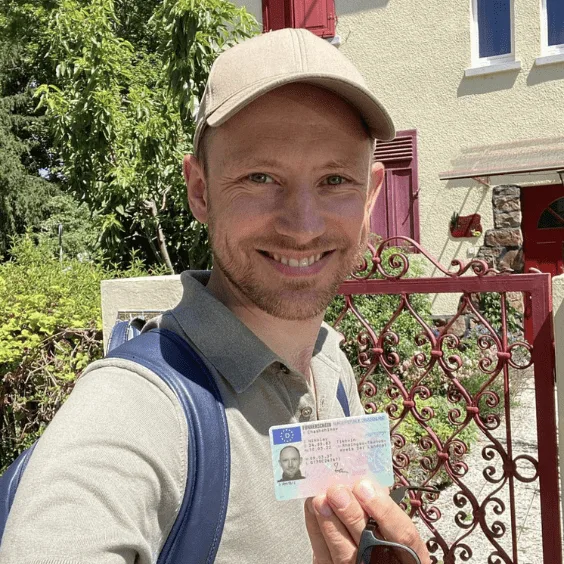
EU License Holders: EU driving licenses are usually legitimate forever but need to be exchanged for a German license if you become an irreversible resident.
Non-EU License Holders: Typically, you can drive with a legitimate foreign license for approximately 6 months; nevertheless, after this, you will need to convert to a German license. This might require a written test and, in some cases, a useful test, depending on the nation of origin.
Translation of License: It is a good idea to have your foreign license translated if it is not in German or English.
Often Asked Questions (FAQs)
1. For how long does it require to obtain a German driving license?
The time needed can vary substantially based on individual readiness and scheduling, however the procedure can usually take anywhere from a few weeks to several months.
2. Can I take driving lessons in English?
Yes, many driving schools in Germany provide lessons in English, particularly in regions with a high migrant community.
3. What is the expense of acquiring a driving license in Germany?
The overall expense can vary based upon driving schools and needed lessons, however it generally varies from EUR1,500 to EUR2,500.
4. Is a first-aid course obligatory?
Yes, completion of a first-aid course is a necessary requirement for getting a German driving license.
5. Can I use my foreign driving license after transferring to Germany?
Foreign licenses are valid for as much as 6 months for visitors and can be exchanged for a German license for long-term citizens.
6. What takes place if I stop working the driving test?
You can retake the driving test, however you might require to wait a specific period before doing so. It is advisable to have extra lessons with an instructor before the retake.
Getting a German driving license is a structured procedure developed to guarantee that all motorists on the road are well prepared. By following the actions laid out in this guide and understanding the requirements, potential chauffeurs can navigate this system more effectively. Whether you are a new citizen or a long-lasting migrant, having a driving license opens up new chances for exploration and boosts total mobility throughout Germany.
- 이전글Beware Of These "Trends" Concerning trusted cat flap installers 26.03.14
- 다음글Why Do So Many People Want To Know About cat flap installers companies? 26.03.14
댓글목록
등록된 댓글이 없습니다.